Skip to content




June 3, 2026
Why Aerospace & Defense Manufacturing Needs PLM in 2026: Building a Digital Thread with Windchill
READ TIME: 6.7 MINS
Aerospace and defense manufacturers in 2026 need Product Lifecycle Management software to manage rising program complexity, tighter compliance demands, long lifecycle sustainment, and controlled technical data. PTC Windchill helps build a digital thread that connects engineering, manufacturing, suppliers, quality, and service data into one traceable source of truth.
Across the aerospace and defense industries, pressure is building fast. Budgets are growing, production is picking back up, and new programs are becoming more complex. Teams still using old PDM systems, spreadsheets, or disconnected tools may struggle to keep up with speed, compliance, and efficiency.
PLM is no longer optional for A&D manufacturing.
What’s Driving PLM Adoption in Aerospace & Defense Right Now?
A&D manufacturers are facing more complex programs, tighter compliance demands, supply chain pressure, and faster investment in digital engineering. Legacy systems may store product data, but they often cannot connect it across engineering, manufacturing, quality, suppliers, service, and the factory floor.
That is why more defense companies and aerospace manufacturers are moving toward PLM platforms that support a governed digital thread.
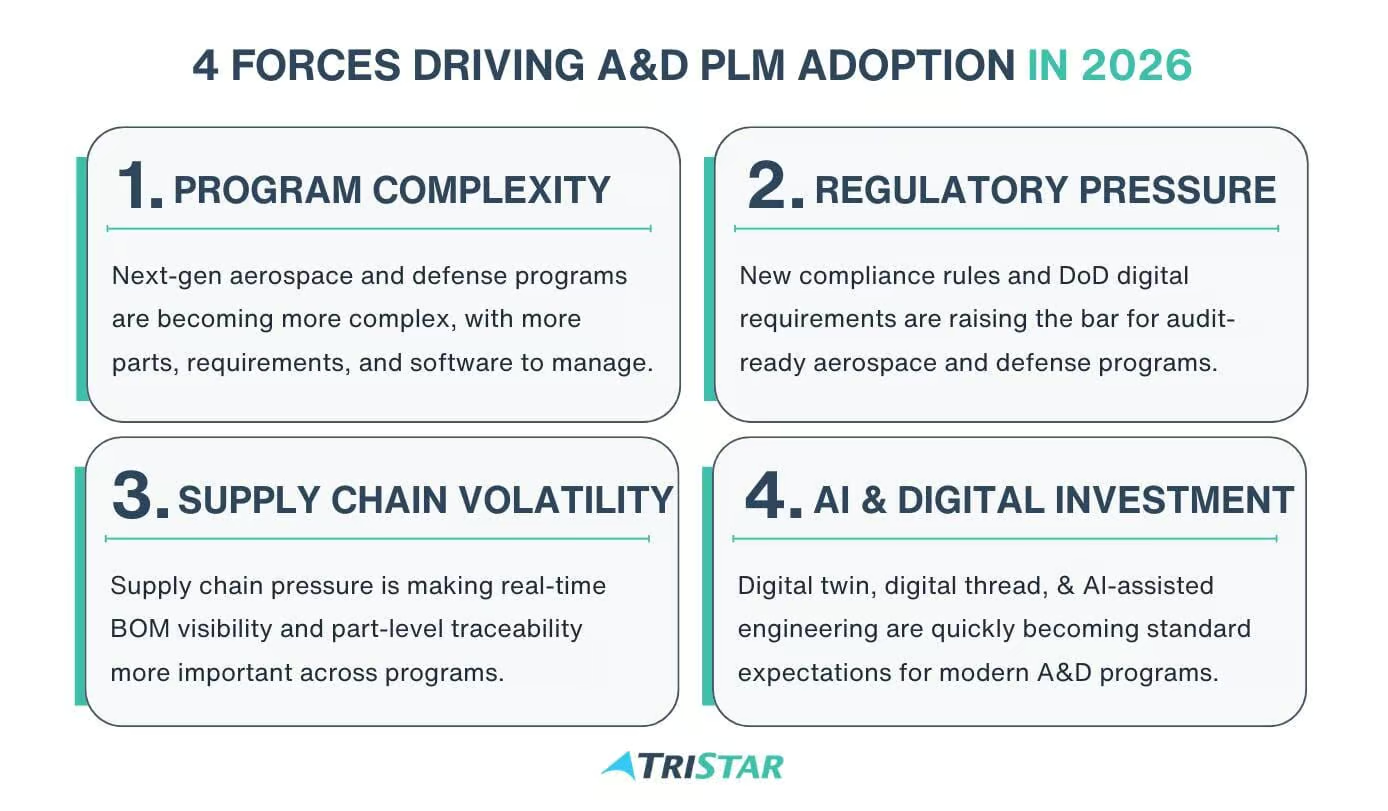
Program Complexity Is Growing
Modern A&D platforms include millions of parts, thousands of requirements, and more connected hardware, software, and electronics. Without PLM, teams are often stuck reconciling revisions, requirements, tests, and supplier updates across disconnected systems.
For advanced manufacturing teams, that slows decision-making and makes it harder to keep engineering, production, and defense operations aligned.
Regulatory Pressure Has Increased
AS9100 Rev D, ITAR, EAR, DFARS, and CMMC 2.0 create pressure around traceability, controlled data access, cybersecurity, and audit-ready records. Disconnected files and manual approval trails make those requirements harder to manage.
As compliance requirements increase across the aerospace and defense sector, manufacturers need systems that can support both product quality and data control.
Supply Chains Need Better Visibility
Tier 1 and Tier 2 suppliers need live visibility into BOMs, change orders, and configuration updates. Single-source dependencies on castings, semiconductors, and rare earth components demand part-level traceability across the production network.
AI and Digital Twin Investment Is Accelerating
The CIMdata-administered Aerospace & Defense PLM Action Group released 80 benchmarked digital twin and digital thread use cases in March 2026. PTC’s NVIDIA Omniverse integration is making real-time simulation a baseline expectation rather than a future state.
For manufacturers investing in digital transformation, connected PLM data is what allows innovation to move from engineering strategy into real production and sustainment workflows.
What Is a Digital Thread in Aerospace and Defense Manufacturing?
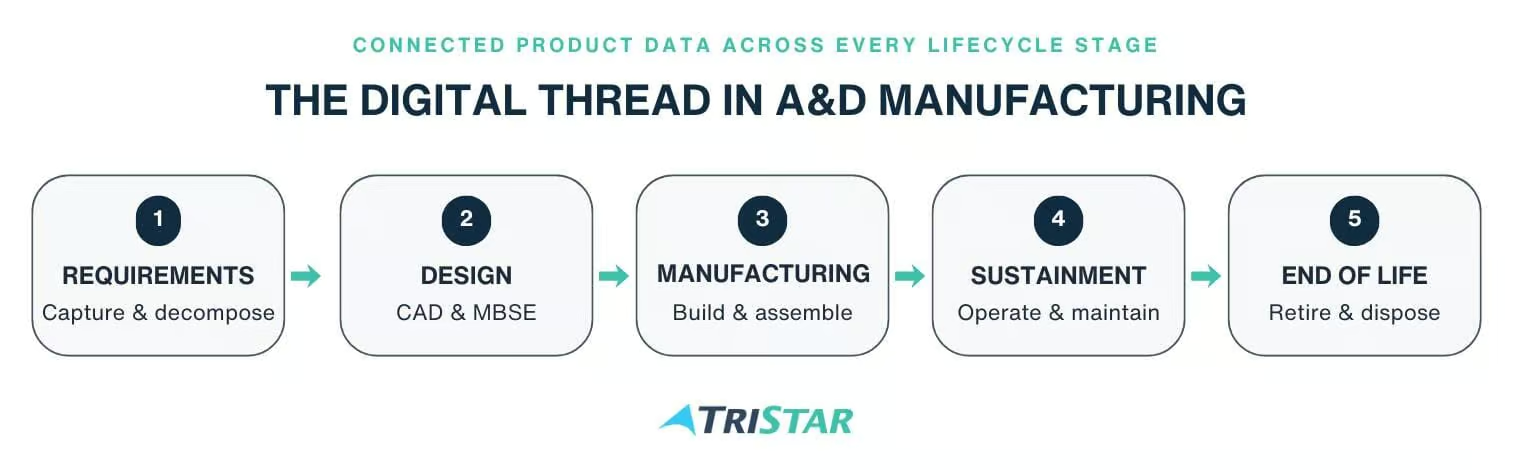
A digital thread is the connected flow of product data across every lifecycle stage. It links requirements, design, manufacturing, quality, suppliers, sustainment, and end-of-life records into one traceable system.
In the A&D industry, the digital thread connects the as-designed, as-planned, as-built, as-maintained, and as-flying configurations of an aircraft, weapon system, satellite, or other complex platform.
This matters because A&D products often stay in service for decades. A design decision made early in development may need to be traced years later during production, maintenance, certification, repair, or modernization.
Why A&D Programs Cannot Operate Without One
A digital thread helps A&D manufacturers:
- Trace sustainment data back to the original design intent
- Connect requirements to parts, tests, suppliers, and quality records
- Keep engineering changes aligned with manufacturing and service teams
- Support customer reviews, DCMA audits, FAA requirements, and contract milestones
- Maintain configuration control across long-lifecycle assets
- Preserve institutional knowledge as senior engineers retire
For platforms that may stay in service for 30 to 50 years or longer, this level of traceability is part of managing the product responsibly across its full lifecycle.
The Cost of Fragmented Data
When product data lives in disconnected systems, teams lose time and increase risk. Common issues include:
- Rework caused by outdated BOMs, drawings, or work instructions
- Manual audit preparation across spreadsheets and shared folders
- Delayed certifications and missed contract milestones
- Poor visibility into supplier changes and part-level status
- Configuration mismatches between engineering, manufacturing, and sustainment
- Loss of program knowledge when experienced engineers leave
Why Aerospace and Defense Manufacturers Choose PTC Windchill
PTC Windchill is the PLM platform behind aerospace leaders, including Airbus Helicopters, Rolls-Royce, and Raytheon. It gives A&D manufacturers a single product data hub, multi-CAD support, and built-in capabilities for change control, configuration management, and traceability that regulated industries require.
Configuration and Change Management Built for Regulated Programs
A&D manufacturers need to know exactly which part, design, document, or configuration applies to a specific program, aircraft, system, or serialized asset. Windchill helps manage that complexity through controlled workflows and configuration management capabilities.
Key capabilities include:
- Controlled ECN and ECO workflows with audit trails
- As-designed, as-planned, as-built, and as-maintained BOM views
- Effectivity tracking for serialized assets, tail numbers, hull numbers, and program-specific configurations
- Change history that shows what changed, who approved it, and when it was released
- Version control for drawings, CAD models, documents, and related product records
Requirements Management and MBSE-Ready Architecture
Pairing Windchill with Codebeamer, PTC’s ALM platform, links software requirements directly to hardware design. This supports model-based systems engineering across mechanical, electrical, and software disciplines, so every requirement traces to the part, test, and supplier that satisfies it.
This connection is especially valuable as defense companies and aerospace manufacturers build more software-defined products that depend on advanced technology, connected systems, and cross-discipline collaboration. Learn more in our ALM and PLM connection overview.
Multi-CAD and Supply Chain Integration
Most A&D manufacturers do not operate in a single-tool environment. Engineering teams, suppliers, and partners may use different CAD systems, ERP platforms, MES systems, and quality tools. Windchill supports that reality by connecting product data across tools and teams.
Common integration needs include:
- Native integration with Creo
- Support for CAD environments such as SolidWorks, NX, AutoCAD, and CATIA
- Connections to ERP systems like SAP and Oracle
- Integration with MES, QMS, and IIoT platforms
- Supplier collaboration through Windchill ProjectLink
- Controlled access to program-specific data for internal and external users
Compliance and Security
Windchill includes Enterprise Digital Rights Management for ITAR and export-controlled data, role-based access controls, and audit logging. Windchill+ SaaS offers cloud deployment options for programs that want cloud agility without giving up data control.
6 Reasons Aerospace and Defense Manufacturers Need Windchill in 2026
Aerospace manufacturing and defense manufacturing programs in 2026 require faster decisions, tighter compliance, and connected supply chains. Windchill PLM delivers all three.
1. End-to-End Traceability for Audits and Certifications
Every part, requirement, test result, and supplier action is recorded and retrievable. AS9100, FAA, and DoD audit preparation drops to hours instead of weeks.
2. One Source of Truth Across the Enterprise
Engineering, manufacturing, quality, procurement, and sustainment teams work from the same data. Design changes flow downstream automatically through Windchill Navigate role-based apps.
3. Faster Change Cycles Without Sacrificing Control
Automated ECN workflows reduce approval bottlenecks. Engineering teams can move at program speed while maintaining release discipline and full change history.
4. Long-Lifecycle Sustainment Support
Service teams can pull the exact build configuration of a 20-year-old airframe. Spare parts catalogs, technical illustrations, and maintenance manuals stay in sync with engineering changes.
5. Digital Twin and AI Readiness
Windchill is the foundation PTC uses for digital twin, IIoT through ThingWorx, and AI-assisted engineering through its NVIDIA Omniverse integration.
6. ITAR and Export-Controlled Data Protection
Built-in security labels and digital rights management lock down sensitive program data and control who sees what across U.S. and partner-nation teams.
How to Build a Digital Thread with Windchill
Building a digital thread is a phased program, not a single deployment. Most A&D manufacturers need to connect legacy data, standardize processes, align teams, and train users before the full value of PLM can scale across the business.
Step 1: Run a PLM Capabilities Assessment
Start with a PLM Capabilities Assessment to understand the current state. This should map existing systems, data silos, workflows, compliance needs, and pain points across engineering, manufacturing, quality, suppliers, and service. This gives the implementation team a clear starting point before making tool or module decisions.
Step 2: Define a Configuration Management Strategy
Before deploying tools, manufacturers need clear rules for how product data will be structured and governed.
This includes:
- Part numbering
- Classification
- Naming conventions
- Effectivity rules
- BOM structure
- Change review board governance
- Release processes
- Supplier data standards
- Access control policies
Step 3: Implement Windchill with the Right Modules
Once the strategy is defined, manufacturers can deploy the Windchill capabilities that match their program needs.
Common modules and tools include:
- Windchill PDMLink for core data management
- Windchill MPMLink for manufacturing process planning
- Windchill ProjectLink for supplier collaboration
- Codebeamer for software ALM
Step 4: Connect the Rest of the Enterprise
Windchill becomes more valuable when it connects with the systems teams already use across the business. Integrate with ERP, MES, QMS, and IIoT platforms. Use Wincom Datahub or custom Windchill extensions to bridge legacy systems that cannot be replaced overnight.
Step 5: Migrate Legacy Data and Train Users
Data migration should be planned carefully. A&D manufacturers often have decades of CAD files, drawings, BOMs, part records, supplier documents, and service history. Migrating all of that data without validation can create more problems than it solves.
Training is just as important as the migration itself. CAD users, engineers, quality teams, manufacturing planners, procurement teams, and downstream consumers all need to understand how Windchill supports their role. Adoption should extend beyond engineering so the digital thread can support the full business.
Why A&D Manufacturers Partner with TriStar
TriStar Digital Thread Solutions has completed more than 500 PTC Windchill implementations, including programs in aerospace, defense, and other regulated industries. As one of the largest global PTC value-added resellers, we bring the deep Windchill expertise A&D programs require.
Ready to Build Your Digital Thread?
Aerospace and defense manufacturers cannot rely on disconnected systems to manage modern program complexity. A governed digital thread built on PTC Windchill can help teams connect product data, control change, support compliance, and keep long-lifecycle assets traceable from design through sustainment.
TriStar Digital Thread Solutions helps A&D manufacturers plan, deploy, and scale Windchill PLM for regulated environments. Speak with a TriStar Windchill expert today at 800-800-1714 or contact our team to get started.
TriStar Digital Thread Solutions welcomes questions. Feel free to CONTACT US if you can’t find what you’re looking for, or call us at 800-800-1714